
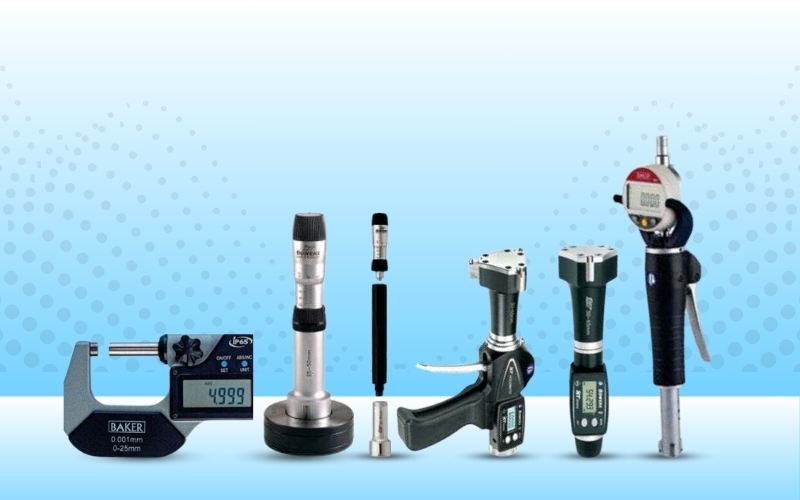
Micrometers are precision Measuring Instruments designed to measure small dimensions with incredible accuracy. These tools are essential in industries requiring high precision, such as manufacturing, engineering, and quality control. This blog explores the uses and applications of micrometers, highlighting their significance in maintaining consistent and reliable measurements.
What are Micrometers?
Micrometers, also known as Screw Gauges, are tools used to measure dimensions with sub-millimeter accuracy. Their design features a calibrated screw, a spindle, and a thimble, which work together to measure dimensions such as thickness, diameter, and length to the nearest 0.01mm or 0.0001 inches.
Micrometers are categorized based on their specific applications: outside micrometers, inside micrometers, and depth micrometers. Each type serves a distinct purpose in ensuring precise measurements.
Top Uses of Micrometers
1. Measuring External Dimensions
Outside Micrometers are used to measure the external dimensions of objects, such as the thickness of metal sheets, pipes, and small mechanical components.
2. Measuring Internal Dimensions
Inside Micrometers are specifically designed to measure the internal diameters of holes, cylinders, and other hollow components. This is crucial in industries like automotive and aerospace, where accuracy is paramount.
3. Measuring Depths
Depth Micrometers Measure the depth of holes, slots, and recesses with exceptional accuracy. This is especially important in machining and toolmaking.
4. Verifying Consistency in Production
Micrometers play a vital role in quality control, ensuring that parts produced in manufacturing processes adhere to specified dimensions and tolerances.
5. Calibrating Other Instruments
Micrometers are often used to calibrate other measuring instruments, serving as a reference standard for accuracy.
Applications of Micrometers across Industries
1. Engineering and Toolmaking
In these fields, Micrometers Measure Components with extreme precision, ensuring that they fit and function perfectly within assemblies.
2. Automotive Industry
Micrometers are critical in inspecting engine components, such as pistons, valves, and shafts. They help ensure that all parts meet strict tolerances for optimal performance.
3. Aerospace Industry
Given the High Stakes in Aerospace Engineering, Micrometers are used to measure and inspect parts that require absolute accuracy, such as turbine blades and airframe components.
4. Manufacturing
Micrometers ensure that products meet exact specifications in mass production, minimizing waste and maintaining quality.
5. Scientific Research
Micrometers are frequently used in laboratories and research facilities to conduct experiments requiring precise measurements of small objects.
Advantages of Using Micrometers
- High Precision: Micrometers provide accurate measurements down to fractions of a millimeter or inch.
- Durability: Constructed from robust materials, they are built to last in demanding environments.
- Ease of Use: Their straightforward design allows for reliable measurements with minimal training.
- Versatility: With various types available, micrometers cater to diverse measurement needs.
Types of Micrometers
- Outside Micrometers: Measure the thickness or diameter of external surfaces.
- Inside Micrometers: Used for measuring the internal diameter of holes or cylinders.
- Depth Micrometers: Designed to measure the depth of holes, slots, or recesses.
- Digital Micrometers: Offer a digital readout for easier and more accurate readings.
How to Use a Micrometer for Accurate Measurements
- Zero the Micrometer: Ensure the Micrometer reads “0” when fully closed to avoid errors.
- Place the Object: Position the object between the spindle and the anvil (or appropriate points for internal/depth measurements).
- Turn the Thimble: Rotate the thimble until the object is firmly yet gently held.
- Read the Scale: Interpret the measurement using the scale or digital readout.
- Record the Measurement: Document the result for further use or analysis.
Tips for Choosing the Right Micrometer
- Type: Select the Micrometer type (outside, inside, or depth) based on your measurement requirements.
- Range: Ensure the Measurement Range of the micrometer matches the size of the objects you typically measure.
- Accuracy: Look for high-accuracy models for critical applications.
- Material and Durability: Opt for high-quality materials, like hardened steel, for extended use.
- Digital vs. Manual: Digital micrometers offer convenience, while manual versions are often more affordable and equally reliable.
Conclusion
Micrometers are indispensable tools in the pursuit of precision. Their unparalleled accuracy makes them essential in industries ranging from manufacturing to scientific research. Whether measuring the thickness of a metal sheet, the depth of a groove, or the internal diameter of a cylinder, micrometers deliver consistent and reliable results.
By integrating Micrometers into your workflow, you can enhance productivity, improve quality control, and achieve exceptional precision in your projects. These tools stand as a testament to the importance of accuracy in modern engineering and manufacturing.