
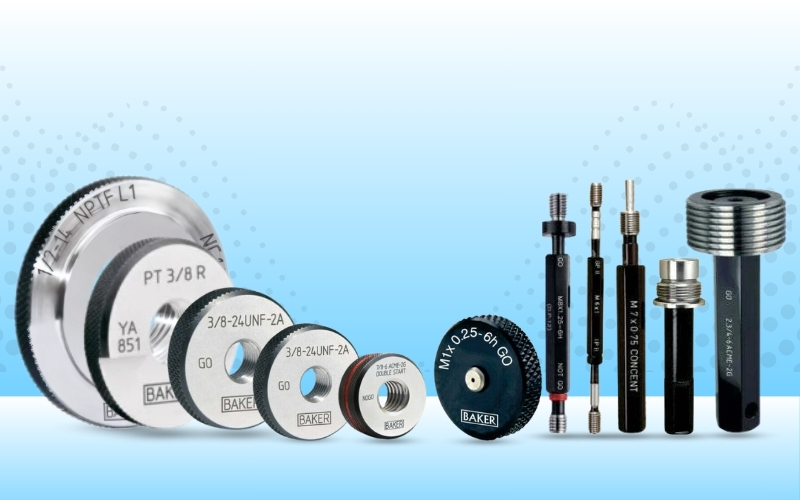
Thread Gauges are indispensable tools in industries that demand accuracy and reliability in threaded components. From Automotive to Aerospace, these devices ensure consistent measurements, quality control, and adherence to specifications. In this blog, we’ll explore the Uses of Thread Gauges, their Applications, and why they are pivotal for industrial success.
What are Thread Gauges?
Thread Gauges are precision instruments used to measure the pitch, depth, and accuracy of threaded components. They are vital in ensuring that screws, bolts, and other fasteners meet industry standards. By offering precise Thread Measurement, these tools prevent operational failures and enhance product compatibility.
Key Uses of Thread Gauges
1. Quality Control in Manufacturing
One of the primary uses of thread gauges is in quality control. Manufacturers rely on these tools to verify the accuracy of threaded components, ensuring they align with design specifications. This step is crucial in industries where precision can mean the difference between success and failure.
2. Ensuring Compatibility
Thread gauges are used to check the compatibility of threaded components in assembly lines. By confirming that a bolt will seamlessly fit into a corresponding nut, they eliminate potential mismatches and reduce downtime.
3. Standardization Across Industries
To adhere to international standards like ISO or ANSI, thread gauges are indispensable. They ensure that threaded components meet required tolerances, streamlining global manufacturing processes.
Applications of Thread Gauges
1. Automotive Industry
In the Automotive Sector, Thread Gauges are used to inspect the dimensions of engine parts, fasteners, and suspension components. With safety being a top priority, thread gauges ensure that every threaded element performs reliably under high stress.
2. Aerospace Engineering
Precision is critical in Aerospace Applications. Thread Gauges are essential for verifying the integrity of fasteners and components that must withstand extreme conditions, such as high pressure and temperature.
3. Construction and Heavy Equipment
Thread Gauges play a crucial role in the Construction Industry. They are used to inspect bolts and fasteners in heavy machinery, guaranteeing durability and structural integrity in demanding environments.
4. Medical Device Manufacturing
Medical Devices often require miniature threaded components with high precision. Thread Gauges ensure that these components, such as implants or surgical tools, meet stringent quality requirements.
Types of Thread Gauges and Their Roles
1. Go/No-Go Gauges
These are widely used to check whether a thread is within specified limits. The “Go” end should fit into the thread, while the “No-Go” end should not.
2. Thread Ring Gauges
Thread Ring Gauges are used for measuring the external threads of bolts and screws. They ensure that the external threads meet the desired standards.
3. Thread Plug Gauges
These Gauges Measure Internal Threads, such as those found in nuts or threaded holes. They verify that the threads are accurate and usable.
4. Pitch Gauges
Pitch Gauges help identify the thread pitch of screws and bolts, a critical step when working with components of unknown specifications.
Why are Thread Gauges Critical in Precision Engineering?
Thread Gauges are essential tools for achieving perfection in industrial designs. They offer:
- Accuracy: Minimize errors in threaded components.
- Cost Efficiency: Reduce waste by identifying faulty threads early.
- Standard Compliance: Ensure components meet global standards.
- Enhanced Safety: Prevent mechanical failures by verifying thread integrity.
Choosing the Right Thread Gauge for your Needs
Selecting the correct thread gauge depends on the specific application. Factors such as thread type (metric or imperial), material, and tolerance levels should guide your decision.
Conclusion
Thread Gauges are the backbone of precision engineering, ensuring that threaded components perform reliably in demanding applications. From automotive to aerospace, their uses and applications span a wide range of industries. By prioritizing thread accuracy, businesses can improve product quality, enhance safety, and meet global standards.
Invest in quality Thread Gauges to streamline your manufacturing processes and elevate your precision engineering capabilities.
FAQs
Thread Gauges are used to measure and verify the Pitch, Depth, and Dimensions of threaded components, ensuring accuracy and compatibility.
They are commonly used in Industries such as Automotive, Aerospace, Construction, and Medical Device Manufacturing.
Key types include Go/No-Go gauges, thread ring gauges, thread plug gauges, and pitch gauges.
Thread Gauges verify that threaded components meet design specifications, reducing errors and ensuring reliable assembly.
Yes, Thread Plug Gauges are used for internal threads, while thread ring gauges measure external threads.
In Aerospace, Thread Gauges ensure that threaded components can withstand high stress, pressure, and temperature, critical for safety and performance.