
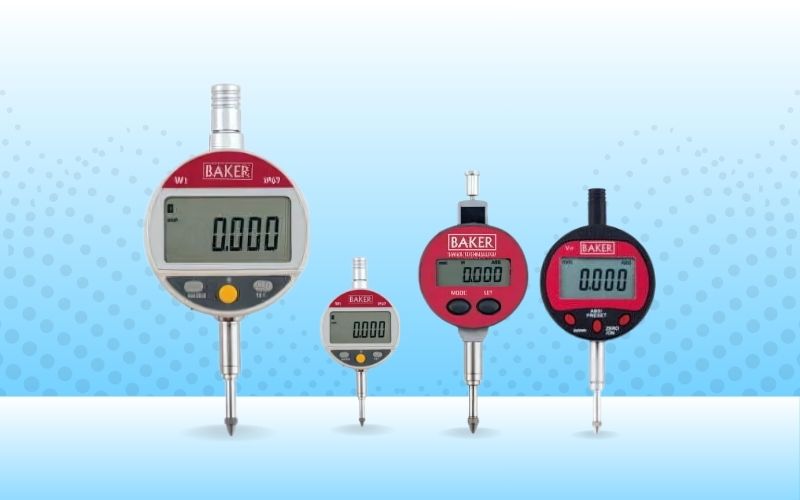
In precision engineering and manufacturing, accuracy is everything. Even a small deviation in alignment, flatness, or runout can affect product performance and assembly quality. This is where Dial Gauges play a vital role in ensuring reliable and repeatable measurements.
They are simple, reliable, and widely used instruments that help manufacturers measure and control minute variations with confidence.
What Are Dial Gauges?
Dial Gauges are precision measuring instruments used to measure very small linear displacements in components and assemblies.
They are commonly used to check variations in height, alignment, flatness, concentricity, and runout in machined parts.
A typical dial gauge displays readings on a circular dial, allowing operators to quickly identify deviations from a reference point using precision dial gauges in shop-floor and inspection environments.
How Dial Gauges Work
Dial gauges operate on a mechanical amplification principle. When the contact point touches a surface, even a tiny movement is transferred through internal gears and springs.
This movement is magnified and shown as a readable value on the dial face, making dial gauges for precision measurement highly effective for detecting minute variations.
Types of Dial Gauges
Different measurement tasks require different types of industrial dial gauges, depending on access, range, and application.
- Plunger Type Dial Gauges
The most commonly used type for checking linear displacement, flatness, and runout.
- Lever Type Dial Gauges (Dial Test Indicators)
Ideal for alignment and concentricity checks in confined spaces.
- Back Plunger Dial Gauges
Used where front access is limited or restricted.
- Long Travel Dial Gauges
Suitable for applications requiring a larger measuring range.
Applications of Dial Gauges
Dial Gauges for Quality Control are widely used across industries where precision and consistency are critical.
Common applications include:
- Machining and tool rooms
- Automotive component inspection
- Aerospace alignment checks
- Production line monitoring
In machining environments, dial gauges for runout and alignment help ensure proper setup and part accuracy.
Why Dial Gauges Matter in Quality Control
Using high-accuracy dial gauges allows manufacturers to detect deviations early and maintain consistent product quality.
They help reduce rejection, prevent rework, and support inspection documentation during audits.
How to Choose the Right Dial Gauge
Selecting the right dial gauges for machining applications ensures reliable measurement and long-term performance.
Key factors to consider:
- Measurement range
- Least count and accuracy
- Type (plunger or lever)
- Mounting compatibility
- Operating environment
Dial Gauges in Modern Manufacturing
Despite the rise of digital instruments, reliable dial gauges for industrial use continue to be preferred for their durability, ease of use, and immediate visual feedback.
Conclusion
Dial gauges remain essential tools for precision measurement and inspection. By choosing dial gauges from a trusted supplier, manufacturers can ensure consistent quality and dependable performance.
For businesses looking to buy dial gauges in India, selecting precision-engineered solutions ensures accuracy, reliability, and long service life.